





Related Posts


By Sophie Joaman • August 2, 2022 • 5 mins read


Products featured on Ntrl Look are chosen independently by our editorial team. When you purchase through our affiliate links, we may receive a commission at no extra cost to you.
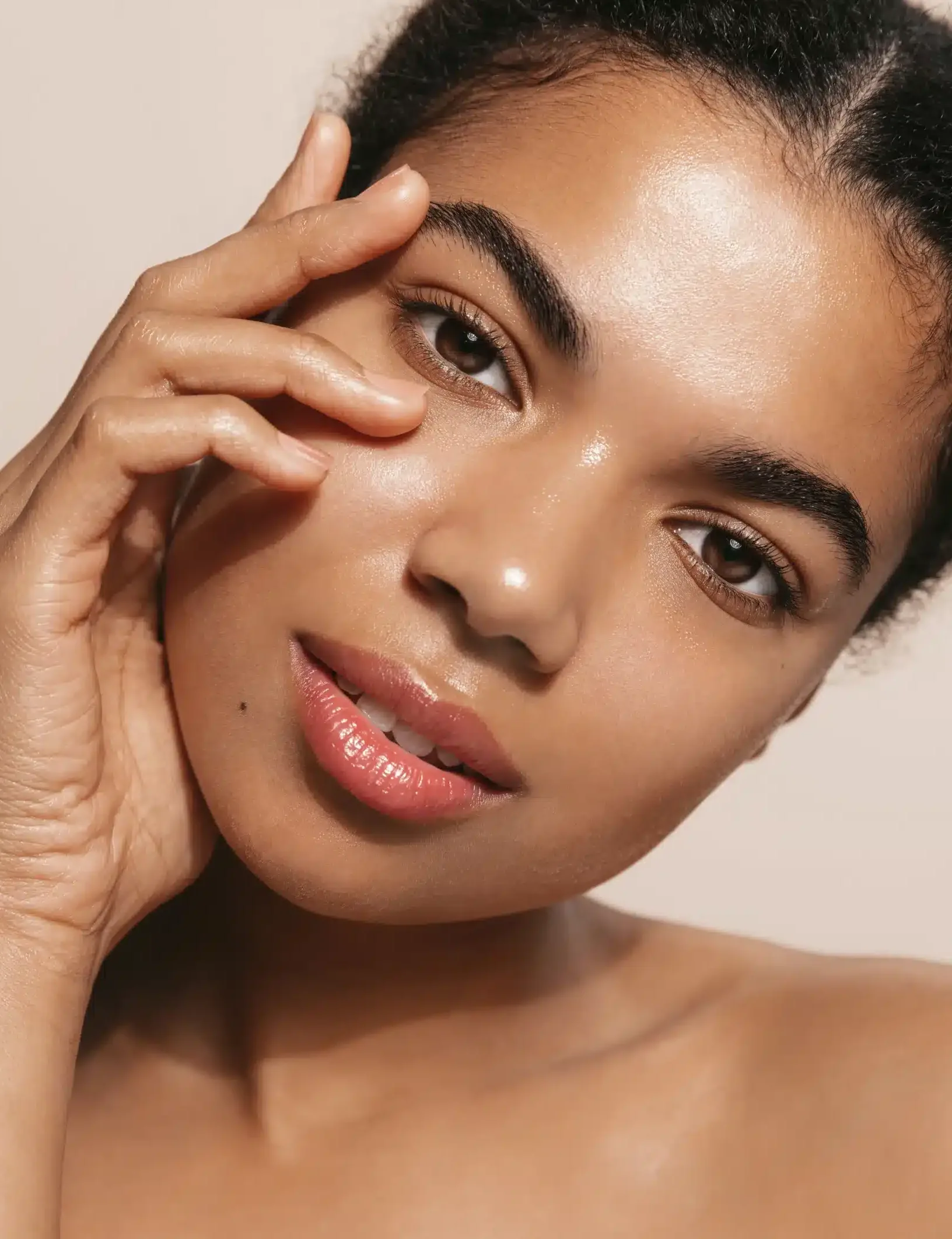
Dewy foundations contain oils that give your complexion a radiant boost when applied. The effect is youthful and hydrated-looking skin, complete with a gorgeous glow. With dewy textures, coverage is more lightweight and blends seamlessly into the skin. Perfect if you are going for a ‘less is more’ kind of vibe. On the other hand, it is also super easy to build up your coverage for those days when you do want a fuller makeup look.
Matte foundations ,in comparison, don’t have the same sheen finish as dewy foundations. They instead create an even, smooth canvas that helps to keep the shine away and last throughout the day. Many matte formulas are full coverage and promise to last up to 24 hours. It is a good option for people who don’t want to be touching up their makeup often.
There are, of course, pros and cons to both types of foundations and knowing the difference between the two can help you make the right choice.
1. Dewy formulas give your skin that radiant and refreshed appearance- Perfect if you suffer from tired-looking skin.
2. This type of foundation contains oils and creates the illusion of hydrated skin for those who suffer from dehydration.
3. Dewy foundations also reflect light, giving you a youthful glow while drawing attention to your best features and away from fine lines.
1. Dewy foundations can make your skin noticeably shinier throughout the day as a result of sweating or humidity.
2. This type of foundation can also heighten the look of blemishes and breakouts.
3. Oil-based dewy foundations can be comedogenic, meaning that they clog pores. Looking out for foundations that are ‘non-comedogenic’ can stop this from becoming a problem.
1. Matte foundations offer long-lasting wear, keeping your make-up in place for longer.
2. They usually more higher coverage than dewy foundations, which helps to reduce the appearance of large pores.
3. Matte Foundations are better for humid conditions as they hold well on the skin.
1. Matte foundations can enhance any dry or flaky areas of skin.
2. They can also appear cakey on the skin as a result of a higher coverage.
3. Matte formulas can similarly feel heavy on the skin, which is not great if you want a light make-up day.
For those who have oily skin, enlarged pores, breakouts and greasiness can occur as a result of too much natural oil production. Applying a dewy foundation would only enhance the oil already sitting on your skin. A matte foundation is, therefore, considered the Holy Grail for anyone with oily skin. Not only does it help to reduce shine, but it also absorbs some of the natural oils, giving you a flawless, buildable base for long-lasting results. The Estee Lauder Double Wear Stay-In-Place foundation promises oil-free, long-lasting wear of up to 24 hours and is not only waterproof, sweat- and humidity-resistant but is also ‘life-proof’ for everyday use!

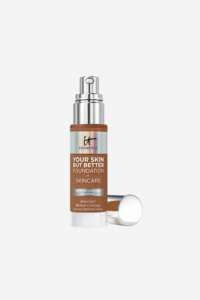
In complete contrast, people with dry skin should typically avoid matte foundations, instead opting for a dewy finish. Matte formulas can cling to dry, flaky patches of skin. A dewy foundation, however, often contains oils to hydrate and refresh the appearance. Some beauty brands are now even combining both makeup and skincare into their products. The IT Cosmetics Your Skin But Better Hydrating Foundation + Skincare is infused with skin-loving aloe vera extract, hyaluronic acid and vitamins E & B5, while at the same time offering a buildable base for a flawless finish. Dewy foundations are a great choice for mature skin, too. As we age, we lose hydration and elasticity in the skin.
Even if you have been an avid matte foundation user in the past, adding a hydrating formula to your makeup can help you to achieve that glowing radiance and make you feel your wonderful, confident self. While it is more clear-cut for dry and oily skin, those with combination skin can struggle to pick between the two. Combination-type complexions usually have both dry patches of skin and oily areas. Would a dewy foundation draw attention to your oily t-zone? Would a matte foundation make certain areas of your face look cakey? To get it right, you’ve got to think about what you need most from your foundation. If your oily areas are worse than the dry ones, avoiding oil-based dewy foundations is a safer bet.
Likewise, if you have more dry skin than oily, choosing a dewy texture will help to cover up problem areas. Foundations such as the Armani Luminous Silk Foundation are oil-free, so make-up stays in place longer and also contains glycerin to keep your skin looking hydrated. A real best of both option. Likewise, natural skin is a combination of dry and oily, but overall is balanced between the two. This means that the choice is really down to you.
If you would rather have the glow of a dewy finish, then opt for a creamy texture that will give you that luminosity. Or if you would rather have flawless fuller coverage, then a matte foundation might just be your new best friend.

