



Related Posts


By Siena Brown • October 13, 2026 • 4 mins read


If you’ve ever stood in front of the skincare aisle wondering whether you need a moisturiser with hyaluronic acid, ceramides, squalane or something a little richer, you’re not alone.
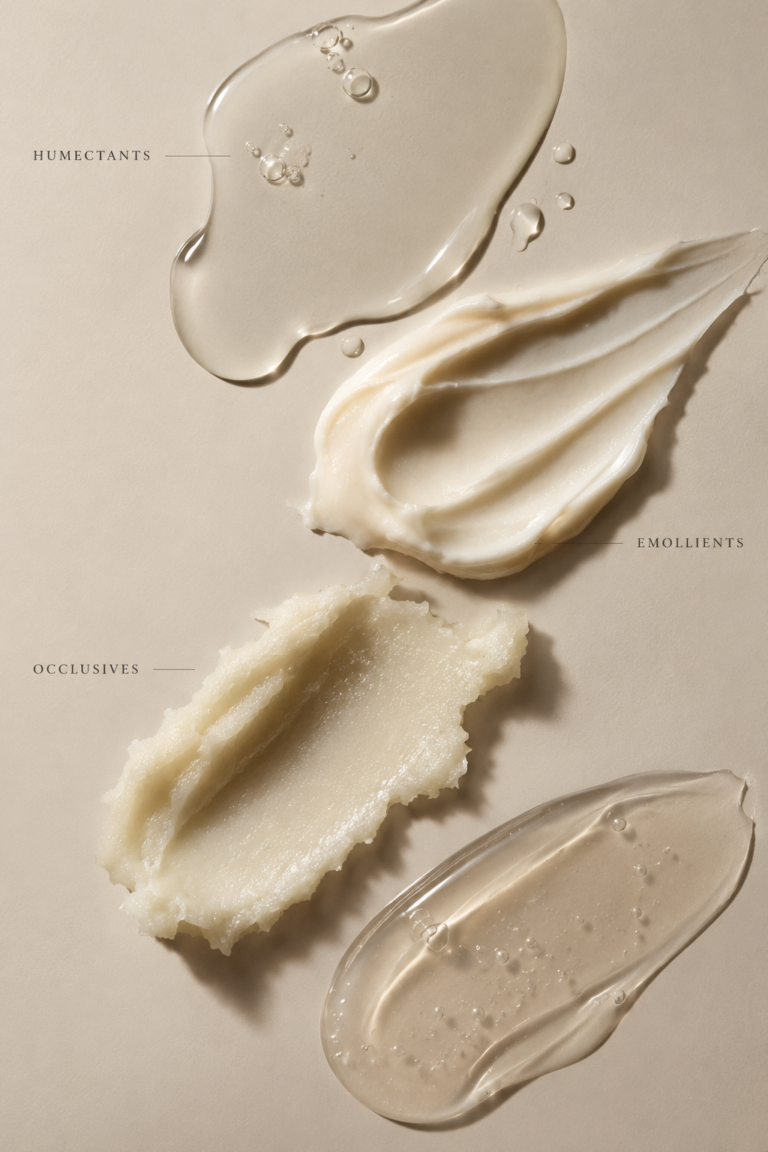
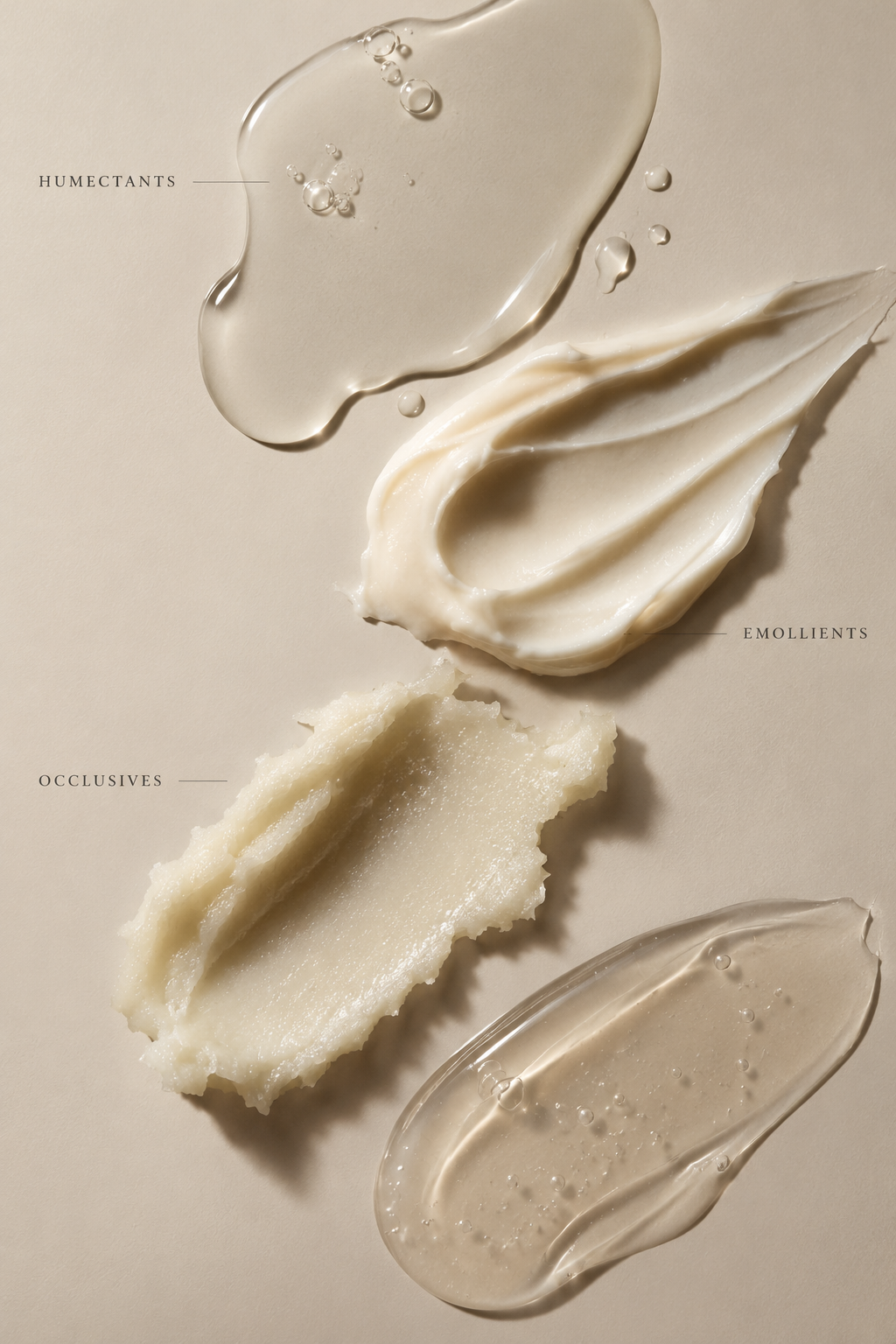
Moisturisers can contain a surprisingly long list of ingredients, but many of them fall into three useful categories: humectants, emollients and occlusives.
Understanding what each one does can make choosing skincare a little easier — and help you work out what your skin might be asking for.
Humectants are ingredients that help attract and hold water in the skin.
They’re particularly useful when your skin feels dehydrated, tight or lacking that comfortable, plump feeling. Common examples include glycerin, hyaluronic acid, urea and panthenol.
You’ll often find humectants in serums, essences and lighter moisturisers, but they’re also common in richer creams.
Think of humectants as the hydration step. They help bring water into the equation, which can make skin feel softer and more comfortable.
One thing to remember is that hydration and dryness aren’t quite the same thing. Skin can be dehydrated regardless of whether it’s oily, combination or dry, which is why humectants can be useful across different skin types.
Emollients work slightly differently. Rather than primarily adding hydration, they help soften and smooth the skin.
They can help fill in some of the spaces between skin cells, leaving the surface feeling smoother and more supple.
You’ll find emollient ingredients in everything from lightweight lotions to rich creams. Examples include squalane, fatty acids, shea butter and certain plant oils.
If your skin feels rough, flaky or less smooth than usual, an emollient-rich product can be a useful addition to your routine.
This is also why a moisturiser can instantly make skin feel softer, even though it hasn’t necessarily added a huge amount of water to the skin.
Occlusives are the ingredients that help reduce water loss from the skin’s surface.
They create a protective layer over the skin, helping to slow the evaporation of water. Petrolatum, mineral oil, dimethicone and certain waxes are common examples.
They’re particularly useful when skin is feeling very dry, exposed or uncomfortable, or when you want to lock in the hydration you’ve already added.
An occlusive doesn’t necessarily have to mean a thick, greasy balm either. Ingredients such as dimethicone can be found in much lighter-feeling moisturisers.
Here’s where things get easier: you don’t necessarily need to choose just one.
Most well-formulated moisturisers combine different types of ingredients because they complement one another.
A formula might contain a humectant to attract water, emollients to soften the skin and an occlusive to help reduce moisture loss.
You can think of them as three parts of the same routine:
Humectants → attract hydration
Emollients → soften and smooth
Occlusives → help keep moisture in
If your skin feels tight or dehydrated, you might enjoy a product with plenty of humectants. If it’s rough or flaky, emollients may be particularly helpful. And if it’s very dry, an occlusive-rich cream or balm can provide an extra layer of comfort.
You don’t need to build your skincare routine around ingredient categories. Instead, use them as a way of understanding what your products are doing.
A hydrating serum followed by moisturiser is one simple approach. You could also choose a single moisturiser that already contains all three types of ingredients.
Applying moisturiser to slightly damp skin can also be a simple way to support hydration, particularly after cleansing.
And if your skin changes with the seasons, don’t be afraid to change the texture you’re using. A lightweight lotion that feels perfect in summer might not feel quite as comfortable when the temperature drops.
Humectants, emollients and occlusives aren’t competing categories — they’re three different ways of supporting comfortable, moisturised skin.
Rather than looking for one magic ingredient, pay attention to how your skin actually feels. If it needs hydration, look for humectants. If it feels rough, emollients can help. If it feels particularly dry, an occlusive can provide that extra layer of protection.
And if your current moisturiser already combines all three? You may already have everything you need.
Publishing industries for previewing layouts and visual mockups.