











Related Posts




By Siena Brown • March 17, 2026 • 6 mins read



The condition of your skin in the morning is often determined by how it’s treated the night before. How completely your makeup was removed, how well the barrier was supported before bed, and even how early the body shifted into repair mode. These aren’t abstract wellness concepts. There are practical factors that affect skin texture, hydration levels, and how makeup applies and holds the next day.
This article covers how to build an evening wind-down ritual that supports overnight skin repair, with each element connected to a visible skin and makeup result.
Skin doesn’t repair itself passively. The overnight window, particularly the hours between 10 pm and 2 am, is when growth hormone peaks, cell turnover increases, and the skin barrier actively works to restore what the day has taken from it.
The condition that allows this to happen effectively is lowered cortisol. When your cortisol stays elevated into the evening, the repair cycle is at risk. Less cell renewal occurs, collagen production slows, and the inflammatory processes that elevated cortisol triggers keep the skin in a reactive state rather than a recovery state. This results in the skin looking less rested than your sleep hours would suggest.
This is why the two hours before bed matter as much as the sleep itself. What you do in that window determines whether the body can shift into a recovery state that your skin repair depends on.
If you’re wearing makeup daily, removing it is the most impactful step in your entire evening routine. Improper removal means that foundation, SPF, and setting product residue remain on your skin during the overnight repair window. That residue is also contributing to congestion, barrier disruption, and a compromised surface that the next morning’s skincare then has to work against.
The double cleanse method is your best approach in this instance. A first cleanse with an oil or balm formula dissolves makeup, SPF, and sebum without causing any friction. The second cleanse, with a water-based gel or cream, clears what the first left behind and leaves the skin genuinely clean. A single cleanse, especially a foaming formula, often leaves behind traces of SPF and makeup in pores while stripping natural oils. The double cleanse removes more, without stripping more.
It’s also worth considering that slowing down the cleansing step is deliberate. A cleanse taken in 30 seconds produces a different result than one taken in 90. The contact time allows the first cleanser to actually dissolve what it’s meant to. Treating it as the beginning of a ritual rather than the last task before bed changes both the result and the experience.
The PM routine has a different job from the morning one. In the morning, the goal is preparation and in the evening, recovery and repair.
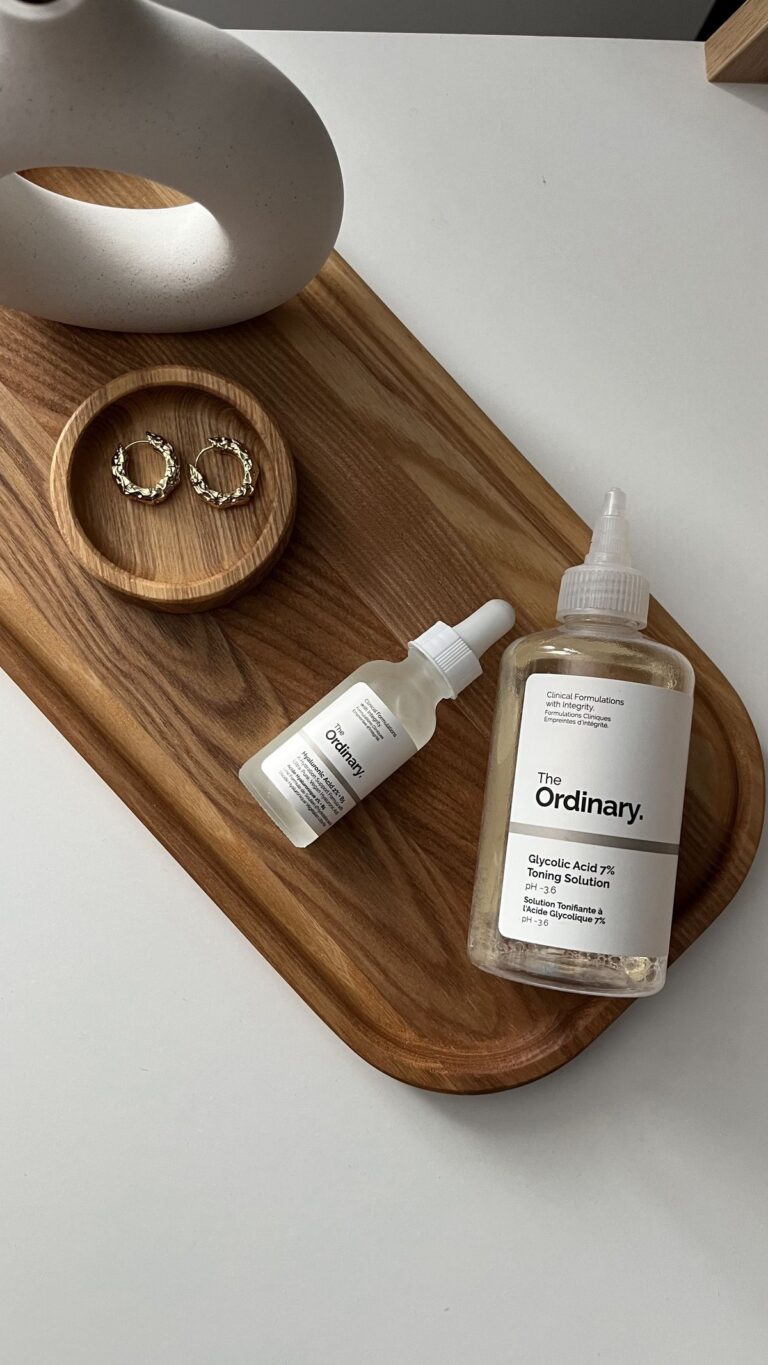
Toning in the evening preps the skin to receive actives and serums more effectively. A hydrating toner applied after cleansing replenishes the first layer of moisture and helps products absorb more completely.
Actives are an evening thing — and for good reason. Retinoids work with your skin’s overnight repair cycle to turn over cells and refine texture, which is exactly what makes makeup sit better in the long run. Acids, used at the right frequency, do the same. Think of them as working with what your skin is already doing while you sleep, not against it. One thing to get right: actives go on before your barrier creams and oils, not after — they need direct contact with the skin to actually do their job.
Next comes a nourishing serum — ceramides, peptides, barrier-repairing actives, the ingredients that actually do the rebuilding work overnight. Follow that with a moisturiser, slightly richer than the one you use in the morning. This is the step that seals everything in and keeps water loss in check while you sleep — when skin is most prone to it.
Managing cortisol isn’t just a wellness talking point — for skin, it determines whether the overnight repair cycle actually happens or gets compromised before it begins.
The habits with the most evidence behind them are pretty straightforward: consistent sleep and wake times, less screen time in the hour before bed, and some form of wind-down — breathing, reading, stretching — that tells your nervous system it’s time to wind down.
This is especially worth noting for oily and breakout-prone skin. Elevated cortisol increases sebum production — so a high-stress evening can mean a noticeably oilier skin surface by morning, which affects how foundation applies and how long it holds throughout the day.
None of this needs to be a major overhaul. A consistent bedtime, 20 minutes off your screen before sleep, and a skincare routine done without rushing — that’s enough to make a real difference to how your skin looks the next morning.
Room temperature is one of those factors most people don’t think about — but it has a real impact on sleep quality. A cooler room, somewhere between 16 and 19 degrees Celsius, supports deeper sleep and the HGH release that skin repair relies on. The problem is that most people sleep in rooms that are too warm, which quietly chips away at deep sleep without ever feeling uncomfortable enough to notice.
Pillowcase fabric matters more than it sounds. Cotton creates friction that can contribute to fine lines over time and absorbs the skincare you’ve just applied — silk and satin reduce both. If your skin is dry or sensitive, this is an easy swap with a visible payoff over a few weeks.
Sleep position is worth thinking about, too. Sleeping face-down or on your side compresses the face and slows lymphatic drainage, which is often why some people wake up consistently puffy regardless of how many hours they’ve slept. Back sleeping reduces this — and if that’s not comfortable, slightly elevating your head can help.
The improvements from a consistent evening ritual show up gradually, which is why they’re easy to miss while they’re happening.
After two to four weeks, the changes start to show up in real ways — smoother texture, less morning puffiness, and skin that feels more hydrated as a baseline. The foundation applies more evenly. Concealer sits better on an under-eye area that isn’t starting the day puffy. And because your skin tone is more even overall, you need less corrective coverage before colour products even go on.
The compounding effect is what makes this worth sticking with. Skin that’s been consistently supported overnight looks and behaves measurably differently after eight to twelve weeks — in texture, in how well it holds hydration, and in how makeup wears through the day. That’s not something any single skincare product delivers on its own.
For the morning routine that makes the most of well-recovered skin: [The Morning Skincare Routine for Flawless All-Day Makeup].
Publishing industries for previewing layouts and visual mockups.