








Related Posts


By Siena Brown • July 21, 2026 • 7 mins read


Most skincare routines are backwards-built, with a product here, a recommendation there, until you end up with a collection of things that don’t necessarily play well together. In fact, it’s an advantage to start from scratch. You get to create something that makes sense for your skin type, your lifestyle and what your skin actually needs, not what’s trending. This article shows you how to do just that.
The order that you layer your skincare affects how well each product works together. Applying a thick moisturiser before a serum means that the serum doesn’t get a chance to absorb properly. Apply an oil before a water-based product and the water-based product just sits on top rather than sinking in. The order isn’t arbitrary — it’s functional.
The general principle is thinnest to thickest texture. Lighter, more watery products go first because they absorb most easily into clean skin. Heavier creams and oils go last because they seal in everything underneath. SPF always goes on last in the morning, as the final skin prep step before makeup.
Getting the order right means the same products do more. Getting it wrong means products that work perfectly in isolation underperform because they’re being applied in the wrong sequence.
Before actives, serums, essences, and treatments, four things form the foundation of every routine that works. Everything else is built on top of these.
A cleanser removes what’s accumulated on the skin’s surface. In the morning, a gentle cleanser removes overnight sebum and any residue from evening products. In the evening, it removes makeup, SPF, and the day’s build-up. The cleanser doesn’t need to be complicated. It needs to clean without stripping.
A moisturiser supports the barrier and keeps the skin hydrated through the day or overnight. The right formula depends on your skin type, but the step itself is non-negotiable for every skin type including oily skin.
SPF in the morning is the single most impactful thing you can do for your skin’s long-term health. It protects against the UV damage that accelerates ageing, hyperpigmentation, and barrier breakdown. It belongs in every morning routine without exception. For more on how it fits into makeup prep: [What Skipping Skin Prep Does to Your Makeup].
These three steps — cleanse, moisturise, protect — are the routine. Everything else adds to them.
Buying products before understanding your skin type is one of the most common reasons routines don’t work. A rich cream that’s perfect for dry skin can cause breakouts on oily skin. A gel cleanser that suits oily skin can strip dry skin too aggressively.
Oily skin produces excess sebum, looks shiny through the day, and is prone to enlarged pores and breakouts. It benefits from lightweight, non-comedogenic formulas and gel-based cleansers that clean thoroughly without adding oil.
Dry skin feels tight, can look dull, and is prone to flaking and rough patches. It benefits from richer moisturisers, cream cleansers, and hydrating ingredients like hyaluronic acid, ceramides, and squalane.
Combination skin has characteristics of both — typically an oily T-zone and drier cheeks. It often benefits from a middle-ground approach rather than treating the whole face the same way.
Sensitive skin reacts easily to new products, can appear red, and tends to feel reactive rather than having a strong oily or dry tendency. It benefits most from short ingredient lists, fragrance-free formulas, and introducing new products slowly.
The morning routine has a specific job: prep the skin for the day and for makeup. Every step should serve that goal.
Step one is cleansing. A gentle cleanser in the morning removes overnight sebum without stripping. You don’t need a strong formula in the morning. The skin hasn’t been exposed to much yet.
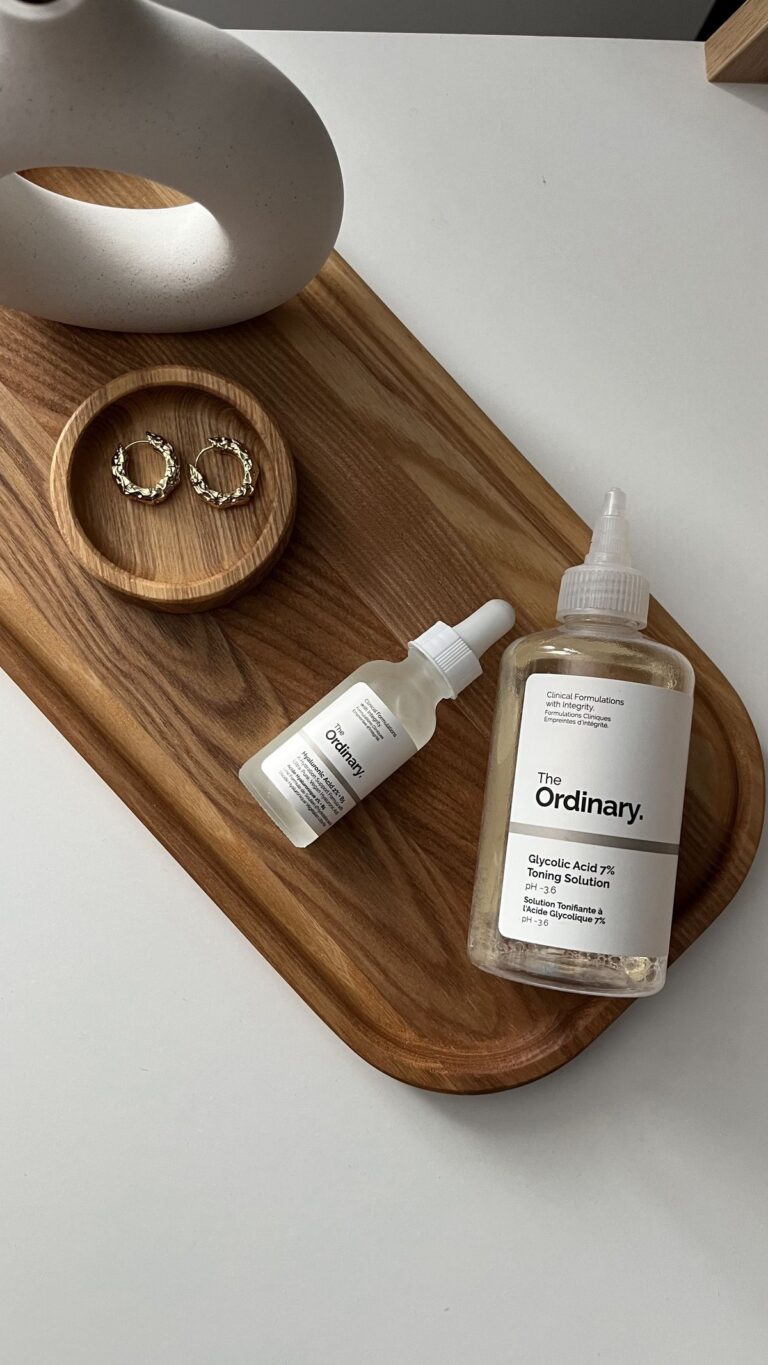
Step two is toner or essence if you use one. These are optional but useful for adding a first layer of hydration immediately after cleansing. Apply with hands rather than a cotton pad for better absorption.
Step three is serum, if your routine includes one. A vitamin C serum in the morning provides antioxidant protection and supports brightening over time. Niacinamide suits oily skin and helps regulate sebum production. Apply after toning and before moisturiser.
Step four is moisturiser. Apply while skin is still slightly damp from the previous steps. This improves absorption.
Step five is SPF. Apply generously as the final skincare step, allow five minutes to absorb, then apply makeup on top. For the full morning routine that builds on this: [The Morning Skincare Routine for Flawless All-Day Makeup].
The evening routine has a different job. It removes the day, repairs the barrier, and supports the skin’s overnight recovery cycle.
Step one is double cleansing if you’ve worn makeup or SPF. An oil-based cleanser or cleansing balm first breaks down SPF and makeup. A gentle water-based cleanser second cleans the skin itself.
Step two is toner or essence, same as the morning if you use one.
Step three is actives, if your routine includes them. Retinoids and acids belong in the evening rather than the morning. If you’re new to actives, skip this step for now and add it once the core routine is established.
Step four is serum. A hydrating or barrier-supporting serum suits the evening well. Hyaluronic acid, peptides, and ceramide serums all support overnight repair.
Step five is moisturiser. An evening moisturiser can be slightly richer than a morning one since it doesn’t need to layer under makeup. For the full wind-down routine: [How to Create a Wind-Down Evening Ritual for Glowing Skin].
Actives are the ingredients that drive the most visible long-term results. They’re also the most likely to cause problems when introduced too quickly.
The right time to add actives is once the core routine is working. That means consistent cleansing, moisturising, and SPF use, with skin that feels stable and not reactive. Adding actives to a routine that’s already causing sensitivity compounds the problem.
Introduce one active at a time. Add it, use it for two weeks, assess how skin responds, then decide whether to continue or adjust before adding anything else. This makes it possible to identify which ingredient is causing a reaction if one appears.
The most useful actives for most people are vitamin C in the morning for brightness and antioxidant protection, and retinol in the evening for cell turnover and long-term texture improvement. Neither needs to be used daily from the start. Both benefit from a slow introduction. For how to layer actives once you’re ready: [How to Layer Actives Without Destroying Your Skin or Your Makeup].
The timeline for skincare results is longer than most people expect. Hydration and comfort improve within days of consistent moisturiser use. Texture and tone take four to six weeks of consistent routine use before meaningful change is visible. Actives like retinol take three to six months to show the full extent of what they’re doing.
Signs a routine is working: skin feels more comfortable, less tight or reactive. Foundation sits more evenly. Texture looks smoother over time. These improvements are gradual rather than dramatic.
Signs a routine needs adjusting: increased breakouts that don’t resolve after the first two weeks, persistent redness or sensitivity, skin that feels tight despite moisturiser. These are signals to simplify rather than add more. For the minimal, barrier-focused approach that suits a new routine best: [Build a Minimalist Barrier Routine for Stronger Skin].
Publishing industries for previewing layouts and visual mockups.