




Related Posts




By Siena Brown • June 11, 2026 • 5 mins read


Foundation that slides isn’t always an oil problem, even though oil usually gets the blame. Humidity changes the surface tension between skin and product in a way that has more to do with moisture in the air than moisture on the face — which is why foundation can slide even on days skin doesn’t feel particularly oily.
Understanding the actual mechanism behind the slide, rather than defaulting to “more powder,” is what separates a base that grips through a humid day from one that keeps needing to be pushed back into place.
Oil-driven breakdown and humidity-driven slide look similar on the surface but come from different sources. Oil affects grip by creating a slick layer between skin and product, which is why oil-control prep helps. Humidity works differently: ambient moisture affects the outermost surface layer of skin itself, softening the surface foundation is meant to adhere to, separate from how much sebum the skin is actually producing.
This is why foundation can slide on a day skin doesn’t feel oily at all — the humidity is affecting adhesion at a different level than sebum does. It’s a useful distinction because it changes what actually fixes the problem: oil control alone won’t solve a grip issue caused primarily by ambient moisture, which is where primer choice and application technique start to matter more than blotting.
Silicone-based primers behave differently in humidity than they do in oil-heavy conditions. Silicone creates a smooth barrier that can actually improve grip in humid air by giving foundation a more stable, less porous surface to sit on — which is a different job than the oil-absorbing primers built primarily for shine control.
Gripping or tacky primer formulas exist specifically for this purpose: they’re formulated for adhesion rather than smoothing or matte finish, and they tend to outperform standard primers when the main issue is slide rather than shine. It’s worth being clear-eyed about the distinction here — a primer that controls oil well doesn’t automatically improve grip, and choosing based on the actual problem (sliding versus shine) tends to get better results than defaulting to whatever primer’s already in a routine.
A meaningful amount of foundation breakdown through the day comes from repeated touching, talking, and general facial movement — not sudden sweat. This kind of slide tends to happen gradually over hours rather than all at once, which is part of why it can feel confusing when foundation “just moves” without an obvious trigger like heat or activity.
Areas around the mouth and nose creases see the most movement-based slide simply because they move the most throughout a normal day. Reducing unnecessary touching, and choosing application techniques that build grip specifically in these higher-movement zones, addresses a source of slide that sweat-focused fixes don’t touch.
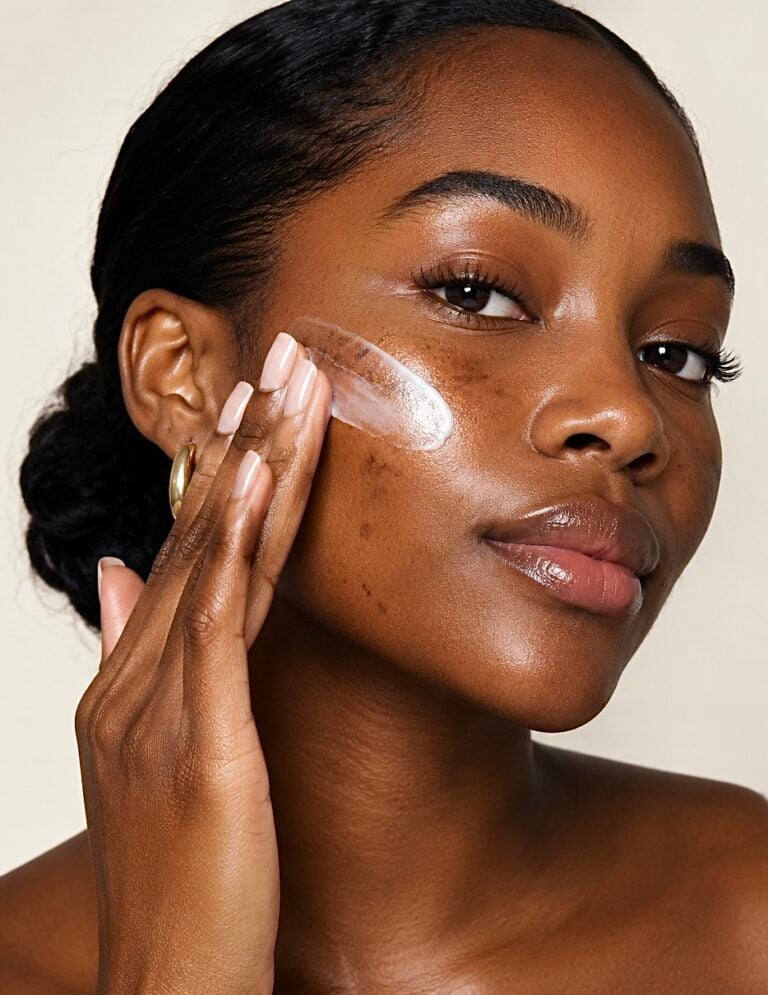
Pressing foundation into skin creates meaningfully better adhesion than swiping it on, because pressing works product into the surface rather than leaving it sitting on top where it’s more vulnerable to both movement and humidity. This is a simple technique shift that affects grip more than most product choices do.
Thin, pressed layers tend to outperform one thicker, swiped-on layer in humid conditions — building coverage gradually gives each layer a chance to adhere before the next goes on, rather than asking one heavy layer to hold everything at once. Tool choice plays a role too: a damp sponge presses product in more effectively than a brush glides it on, and fingers — while useful for warmth and blending — can transfer oil that works against the grip being built.
Standard setting powder addresses oil and shine, but it doesn’t solve a grip problem on its own — powder sits on top of foundation rather than reinforcing the adhesion underneath it. Setting techniques that actually help grip tend to work earlier in the process, at the primer and application stage, with powder playing a smaller supporting role rather than the main fix.
A light mist-set can help lock in a base that’s already been applied with grip-focused technique, but timing matters: misting too heavily, or too soon after powder, can undo some of the grip just built by reactivating product before it’s had a chance to settle. It’s worth setting realistic expectations here too — the goal is meaningfully reducing slide, not eliminating it completely regardless of conditions. Even a well-built, grip-focused base will move somewhat on an extremely hot, humid, high-movement day. The difference is in degree, not in achieving something that never shifts at all.
Foundation sliding in humidity is a grip problem before it’s an oil problem — ambient moisture changes adhesion in a way powder alone doesn’t fix. Once primer choice, application technique, and setting method are aligned to actually build grip, foundation holds its position through a humid day instead of needing constant repositioning.
Products featured on Ntrl Look are chosen independently by our editorial team. When you shop through our affiliate links, we may receive a commission at no extra cost to you.
Publishing industries for previewing layouts and visual mockups.